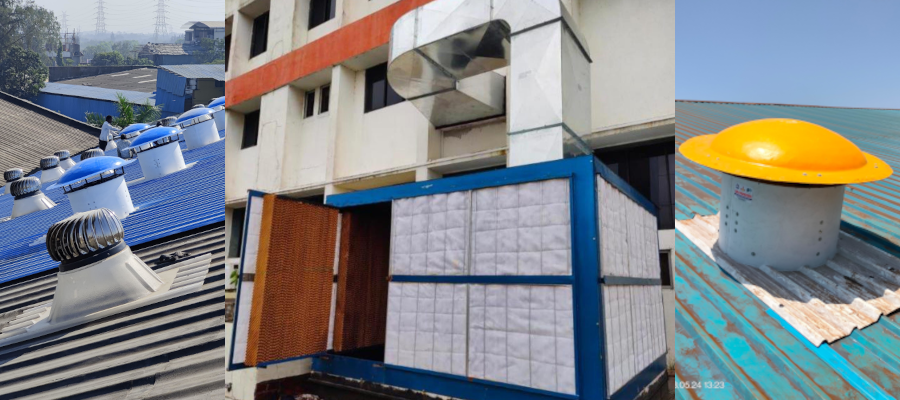
Ventilation systems are crucial for maintaining healthy and comfortable indoor environments in residential, commercial, and industrial settings. Proper installation of these systems is essential for their optimal functionality and efficiency.
Key Steps Which We Take While Installation
- Planning and Site Assessment:
- Conduct a thorough site assessment, considering the building’s size, purpose, occupancy levels, and existing conditions like potential hazards (e.g., asbestos, mold).
- Outline safety measures.
- Determine ventilation needs by analyzing air quality, pollutants, and humidity levels.
- Select appropriate ventilation components (e.g., fans, filters, ducts) based on airflow capacity, efficiency, and noise levels.
- Site Preparation:
- Clear obstructions from the installation site.
- Ensure the area is clean, well-organized, stable, and level.
- Verify structural integrity to support the installation of heavy components.
- Ensure proper access to power and other utilities.
- Installation of Ventilation Units:
- Position units strategically to maximize airflow and efficiency.
- Secure units according to manufacturer guidelines, using correct fixtures and ensuring level placement.
- Connect units to power following local electrical codes and ensure proper grounding and bonding.
- Test initial operations, checking for noise and vibration.
- Ductwork Considerations:
- Plan ductwork meticulously, selecting durable materials and sizing ducts appropriately for efficient airflow.
- Route ductwork to minimize bends and turns, which can reduce efficiency and increase noise.
- Seal joints to prevent leaks and consider insulation for enhanced efficiency.
- Ensure alignment and secure connections when connecting exhaust fans to ducts.
- Safety Precautions:
- Prioritize safety by following regulations and safety protocols.
- Provide training on handling refrigerants and working at heights.
- Use appropriate personal protective equipment (PPE) and lifting equipment.
- Turn off and lockout/tagout power during electrical work.
- Follow proper wiring and grounding techniques.
- Establish emergency procedures and maintain a well-stocked first aid kit.
- Testing and Commissioning:
- Perform mechanical and electrical pre-commissioning checks, inspecting components, verifying connections, and ensuring proper rotation direction for fans.
- Check line voltage and phase rotation before energizing the power.
- Measure current drawn by the fan motor and observe for abnormal noise and vibration.
- Verify proper operation of the motor, drive system, and fan impeller.
- Conduct functional tests of exhaust fans and check BMS controls (if applicable).
- Measure total airflow and compare with design flow.